
VENEZERE · WEB DEVELOPMENT · AI ENGINEERING
We engineer how businesses operate.
The deliverable is rarely just a website. It's a million-product catalog that lifted revenue 20% in its first marketed month. A storefront that cleared $20K in month one. Systems that sell, route, and follow up while you run the business.
THE PROBLEM
Friction kills growth before competitors even get a shot.
The spreadsheet that runs the company
breaks a little more every month, and only one person knows why.
Five tools that don't talk to each other
so your team is the integration, retyping data between tabs.
The follow-up that never went out
is a closed deal sitting in someone's drafts folder.
Two employees holding the operation in their heads
which means your business has a bus factor of two.
Here's the arithmetic nobody runs. Count the hours your team spends moving information between tools each week. Multiply by loaded payroll. That number is annual, it's invisible on every P&L line, and it grows with headcount.
Two companies, same revenue. The one that runs on systems is worth more than the one that runs on effort. The difference compounds every quarter.
THE METHOD
We install an operating layer.
A website is one surface of it. The layer underneath is what sells, routes, follows up, and reports, whether or not anyone is at a desk.
Map
We chart how the work actually flows.
We follow the work as it actually happens: where information enters, who touches it, where it stalls, and what the stall costs. This is the assessment, and it's the reason nothing we build is generic.
- Operations map
- Strain points
- Build recommendation
Build
We build the platform the map calls for.
Websites, storefronts, catalogs, portals, internal tools. Engineered, not assembled: server-enforced rules, real integrations instead of copy-paste, documentation your next hire can read.
- Web platform
- Integrations
- Internal tooling
Compound
Then the system starts working shifts.
AI and automation on top of the platform: follow-ups that send themselves, reports that write themselves, routing that doesn't wait for a human to remember. The layer that keeps paying after launch.
- AI workflows
- Automation
- Reporting
Step one is free, because we can't quote what we haven't mapped.
Start with the map →THE PROOF
Claims are cheap. Here are the receipts.
Engagement 001 · Commercial real estate
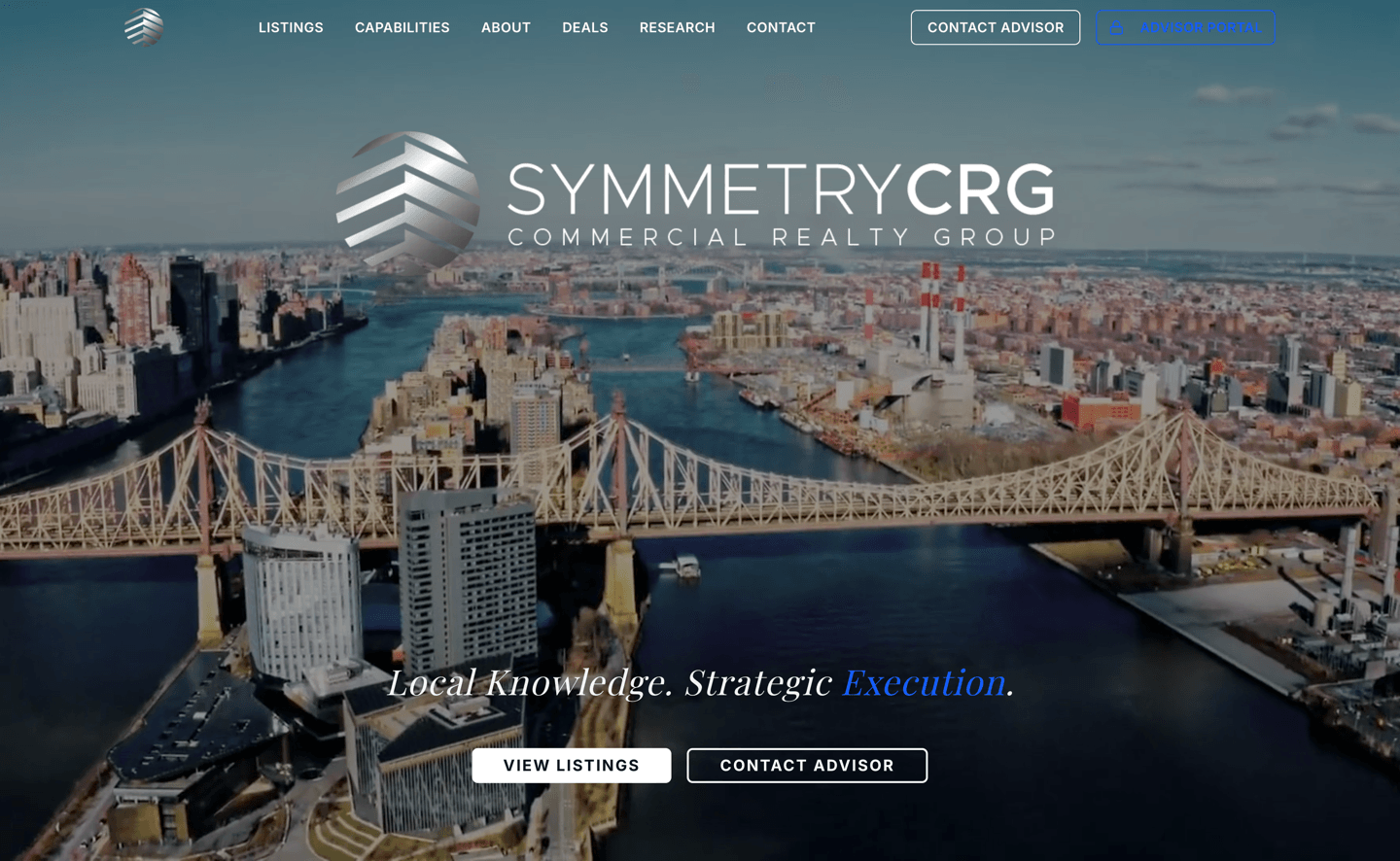
SYMCRG
A commercial real estate firm working across spreadsheets and disconnected tools. We rebuilt the website and brought the day-to-day into one cohesive platform, with fewer software subscriptions to pay for and one login to remember.
Read the full case study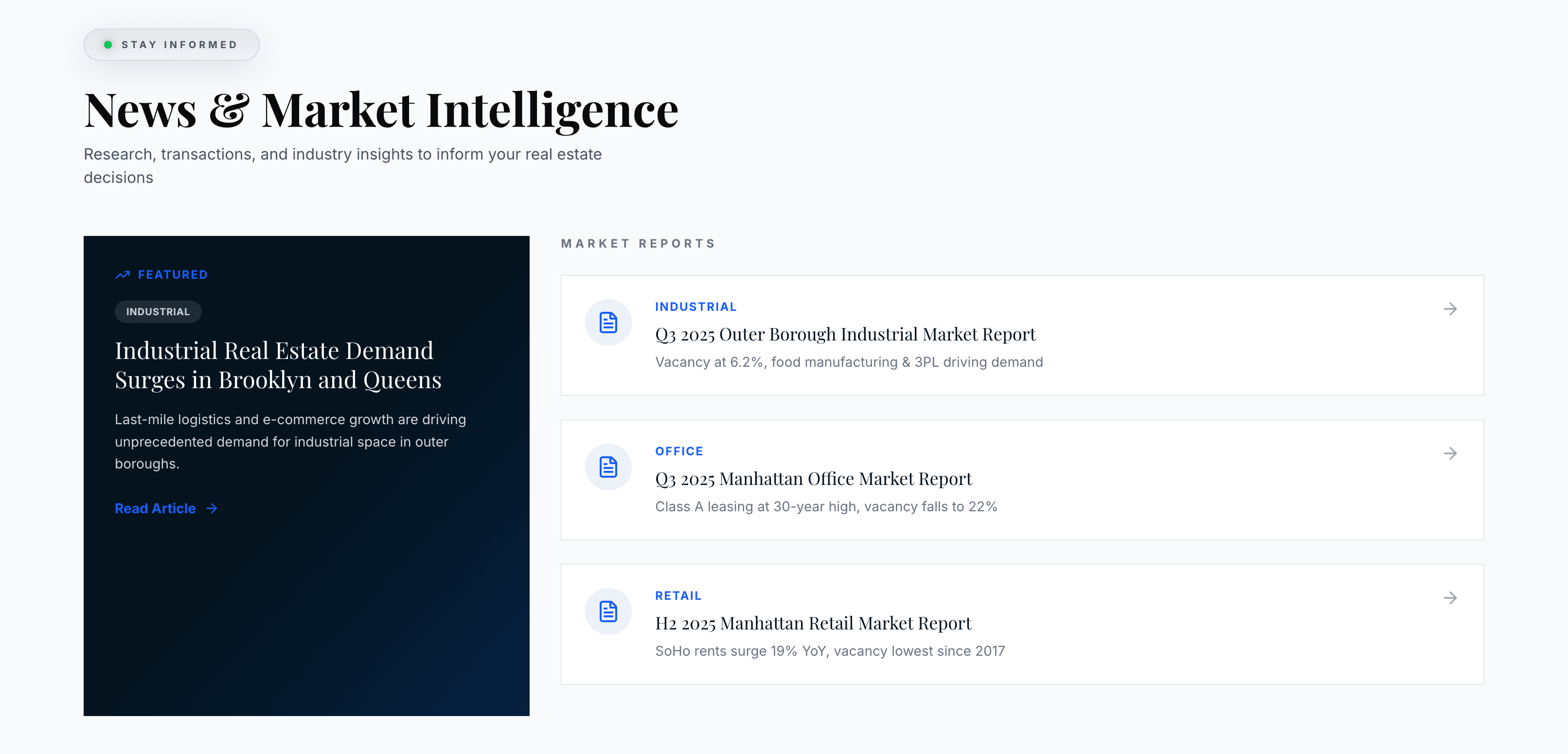


Four sectors, one pattern: the operation gets simpler and the numbers move. Yours would be engagement 005.
View all engagements →FAIR QUESTIONS
The things you're right to ask.
Skepticism is the correct default with agencies. These are the four questions we hear most, answered without the varnish.
Almost every client did. The question isn't whether you have one, it's what it does between visits. If it isn't capturing leads, following up, and feeding your operation, you have a brochure with a domain name. We keep what works and build the layer that's missing.
We don't quote before we map, because the honest answer depends on what the map shows. That's why step one is a complimentary assessment: you see the scope and the reasoning before any number, and you're free to take the findings elsewhere.
Not the way it's usually sold. We don't install chatbots for the sake of it. We put AI where judgment is repetitive: drafting the follow-up, triaging the inbox, summarizing the report. If a workflow doesn't earn its keep, it doesn't ship.
You hear back within one business day. We schedule a working session, map how your operation actually runs, and send you what we found with what we'd build and why. No retainer, no pressure, no drip campaign.
THE OFFER
We'll map your operation. Free.
Request the assessment and we'll chart how your business actually runs: where information stalls, what the friction costs, and exactly what we'd build to remove it. You get the map either way. If the numbers don't justify the build, we'll say so, that's what keeps the proof section honest.
We take a limited number of engagements at a time; the work in the proof section is why. The assessment queue is first come, first mapped.